.jpg)
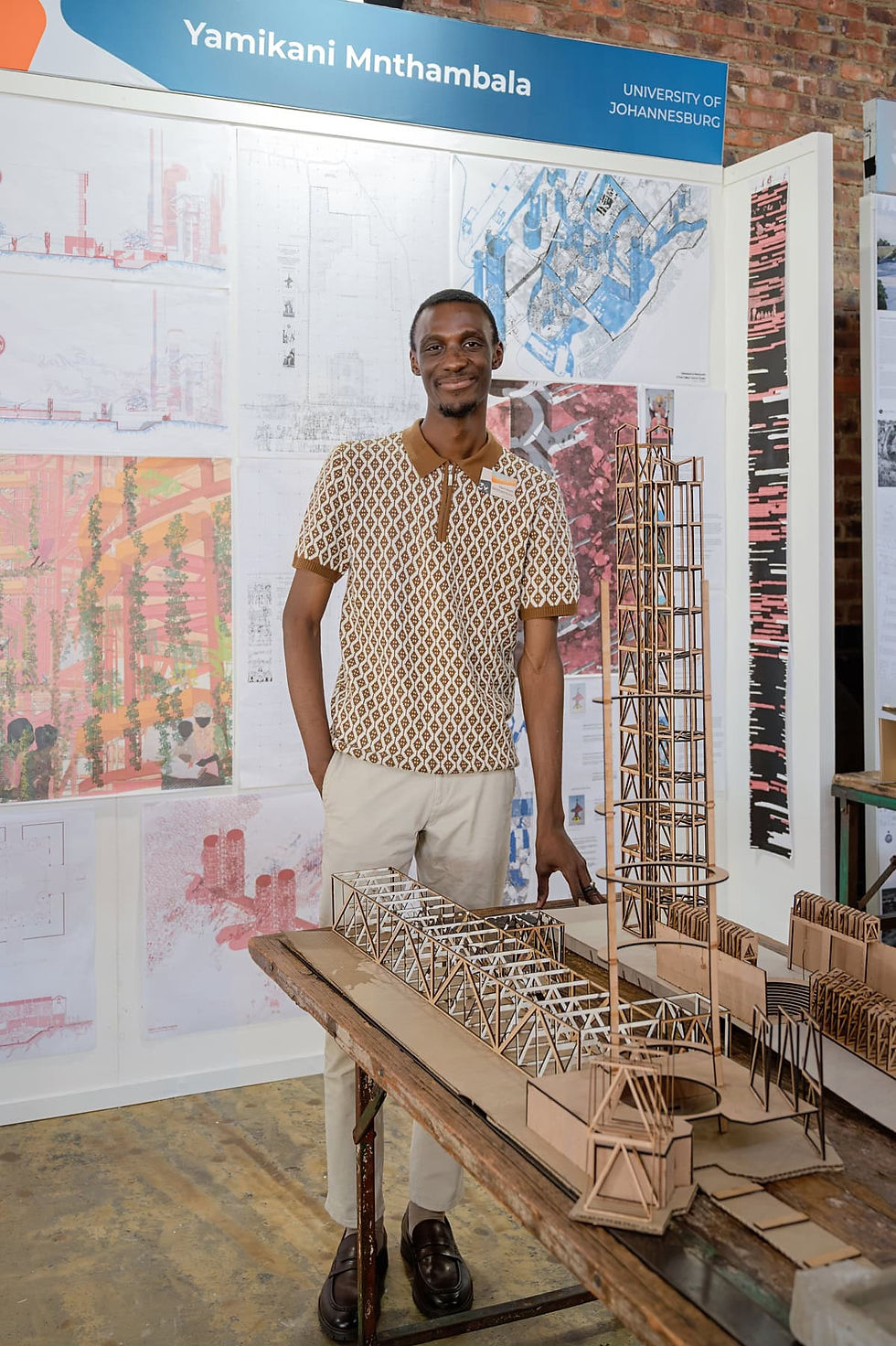

Yamikani Mnthambala
University of Johannesburg
why did you choose to study architecture?
My younger self would have said I chose to study architecture to make pretty buildings. However, as I have grown within the discipline, so too have my reasons for choosing it. It has become less about buildings and more centered on the people and narratives these built frameworks encapsulate. Architecture, in essence, is but a canvas onto which we impose various hues of humanity. And so, in my worldview, architecture is not architecture until we imbue it with meaning and responsibility: stories, narratives, ideologies, advocacy, justice, or simply a concern for how we wish to shape our present and future environments. Within this praxis, architecture is not a savior to be glorified, but a companion that listens without judgment and interprets with understanding. And so, I chose, and continue to choose architecture for its ability to lend an ear to the present and its propensity to participate in inclusive futures, ushering worlds unknown.


PROJECT
FUGITIVE ARCHIVES: The Afterlives of Colonial Infrastructure
PROJECT SUMMARY
This research investigates the relationships between infrastructure, colonial power, and marginalized communities. In South Africa, these relationships become more acute where infrastructure has been weaponized in strategies of extraction and segregation. Durban thus provides a critical locus for examining these themes as an entrepôt and major port. Fugitive Archives: The Afterlives of Colonial Infrastructures investigates how architecture might operate as a critical tool to challenge, resist, and reimagine these inherited structures. Fugitivity forms a critical thematic, framing both the evasive action of infrastructures and negotiations thereof by communities structured by them. The study constructs a spatial registry of infrastructural fugitivity and architectural countermeasures that speculate on equitable futures. This research focuses on Durban’s South Industrial Basin, in particular the Engen oil refinery, and its relationship with its fenceline communities, Merebank and Wentworth, as they grapple with environmental and physical violences, archival silences, and tactics of resistance developed by these communities. Through my two methodologies, “Redaction as Resistance” and “Eidetic Collaging,” the research evidences processes of advocacy and counterinscription, culminating in a speculative architectural proposition. The decommissioning of the Engen Oil Refinery becomes an opportunity to renegotiate a historically contested site through tactics of insertion, remediation, and occupation. Architecture here assumes a companion role—facilitating community ingress, accountability, and collective regeneration within the afterlives of colonial infrastructures.